The Network Is the Most Important Part of Your Smart Home — And the One You Never See
July 15, 2026
Picture the evening. The lights dim on cue, the shades lower, a film starts, music follows you from the kitchen to the patio. Then — the movie stutters. A light switch stops responding. The voice assistant says it can’t reach the device. Suddenly the home that felt effortless feels like a chore.
Nine times out of ten, the culprit isn’t the fancy equipment. It’s the network underneath it.
After enough years designing smart homes across Vancouver, Whistler, Victoria, we’ve learned that the network is the single most important part of a system — and the part homeowners think about least. It’s invisible, it’s unglamorous, and it’s the foundation everything else stands on. Get it right and the whole home just works. Get it wrong and even the best equipment in the world will feel unreliable.
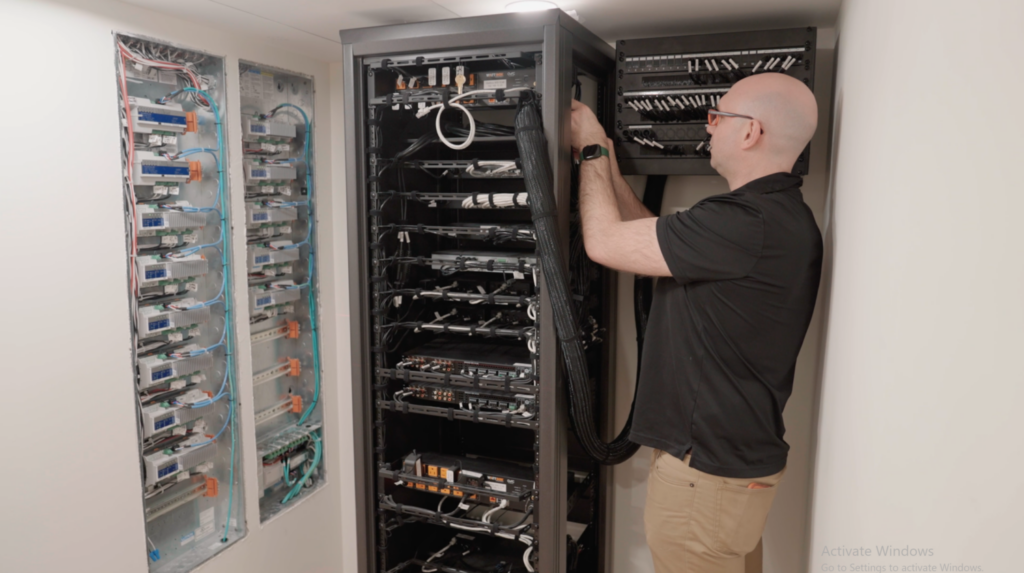
Here’s why it matters, what goes wrong without it, and how we make sure yours is solid from day one.
The network is the nervous system of your home
Think of your smart home as a body. The lights, speakers, cameras, thermostats, shades and TVs are the muscles — they do the visible work. But none of them act on their own. Every command, every automation, every stream of music or video travels through the network. It’s the nervous system carrying signals between everything.
A modern luxury home isn’t running two or three connected devices anymore. It’s running dozens, often more than a hundred — lighting controllers, streaming boxes, security cameras, door locks, sensors, speakers, tablets, phones, laptops, and the automation processors tying it all together. Every one of those is having a constant conversation over your network in one way or another.
When the network is strong, those conversations happen instantly and invisibly. When it’s weak, they stumble — and you feel it as lag, dropouts, and devices that “randomly” stop working.

What actually goes wrong without a strong network
Most of the frustrations people blame on their smart home are really network problems in disguise. A few we see constantly:
— Dead zones. A big home, a Whistler chalet with thick timber and stone, a multi-level Vancouver residence, a sprawling Calgary estate — will have corners where a single router simply can’t reach. That’s where the music cuts out and the camera goes offline.
— Congestion. When too many devices share too little bandwidth, everything slows down at once. Movie night, a work video call, kids streaming games, and a dozen cameras uploading footage all competing for the same lane.
— Instability. Consumer-grade equipment is built for a couple of laptops and a phone, not a fully integrated home. Under real load it overheats, drops connections, and needs constant rebooting — the dreaded “just unplug it and plug it back in.”
— Security gaps. Every connected device is a potential door into your home. A poorly designed network leaves those doors unlocked, mixing your cameras and locks on the same open lane as guest Wi-Fi.
The pattern is always the same: the homeowner spent well on beautiful equipment, but it sits on a foundation that can’t support it. It’s like building a stunning home on a weak footing — sooner or later, the cracks show.
What a properly built network looks like
A strong home network isn’t one better router. It’s a designed system, planned around your home and how you live in it. When we build one, a few things are always true.
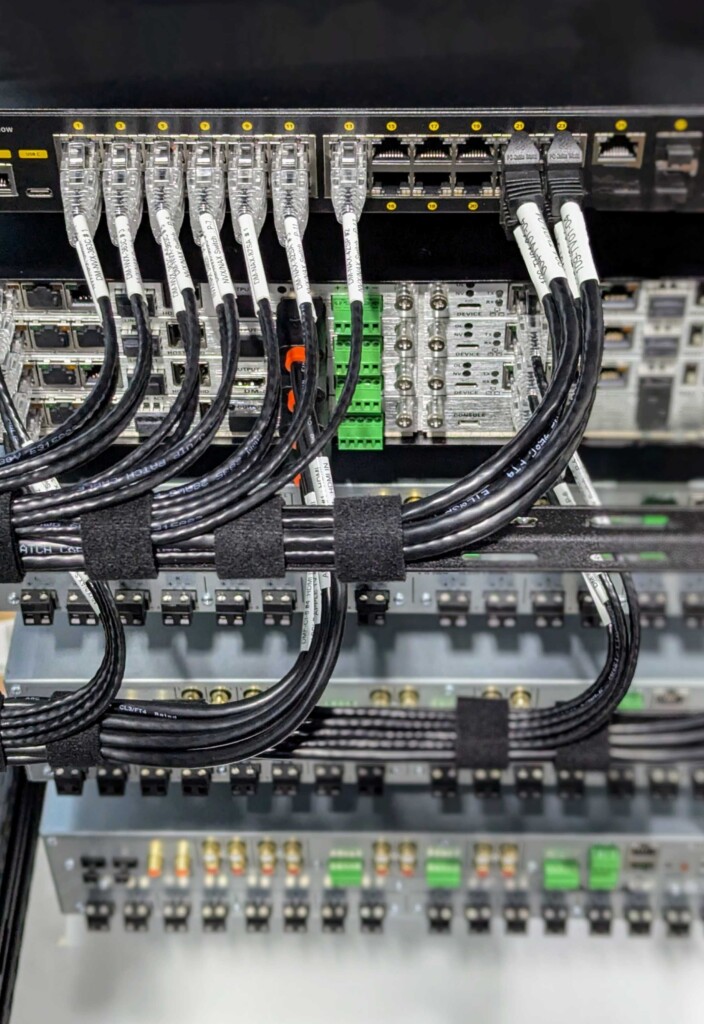
— Wired where it counts. Wireless is wonderful for phones and tablets, but the devices that matter most, TVs, automation processors, cameras, access points — perform far better hardwired. We run structured cabling to these locations so they never depend on a Wi-Fi signal fighting through walls.
— Wi-Fi that reaches everywhere. Instead of one router straining to cover the whole property, we place multiple access points so coverage is seamless from the primary suite to the garage to the patio — even out to the pool or the end of the dock. You walk through the house and never think about signal, because there isn’t a spot without it.
— Room to grow. We size the network for more than you have today, because smart homes only ever add devices. The system we install should still feel fast in five years, not maxed out in one.
— Managed Switches. One of the most overlooked, under-rated components of a network. There is a wide variety of network switches out there. Managed switches cost more, but can do more in terms of keeping your network reliable. Unmanaged switches are often the root cause of the issues we discover on unreliable smart homes.
— Kept separate and secure. We segment the network so your security cameras, your smart devices, your work devices and your guests each live in their own protected lane. That keeps everything running smoothly and dramatically tightens security — a guest streaming Netflix can’t accidentally bump into your door locks.
— Built to stay running. We use professional-grade equipment designed to run 24/7 under real household load, and we set it up so it recovers on its own instead of needing you to reboot anything. The goal is a network you forget exists — because it never gives you a reason to think about it.
Why this is where we start, not where we finish
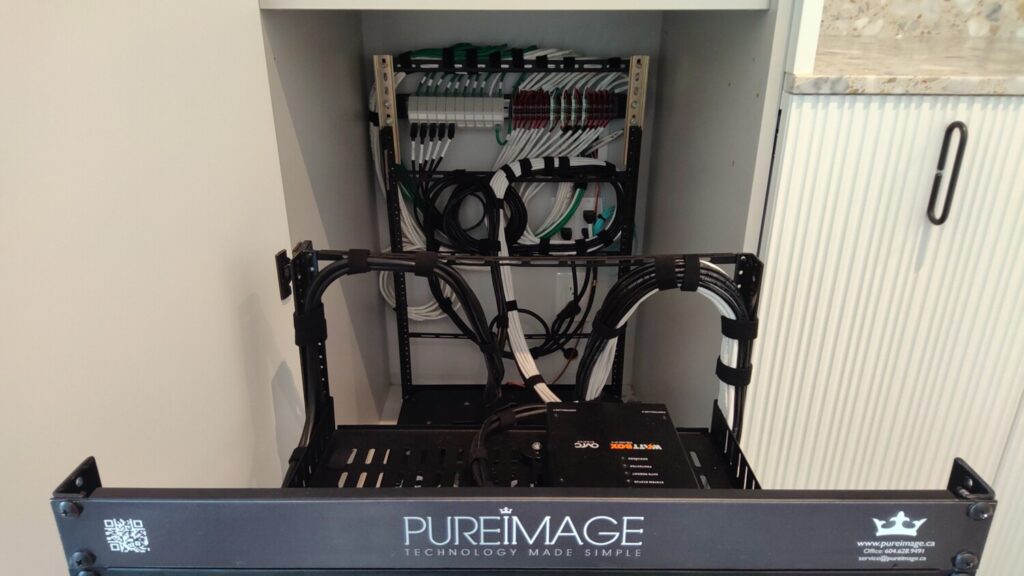
Plenty of companies will happily sell you the exciting parts — the theatre, the lighting, the multi-room audio. Fewer want to talk about the wiring in the walls and the rack in the mechanical room. But that’s exactly where we begin, because we know that everything else depends on it.
We’ve spent over two decades learning this the hard way and the right way, on real projects, in real homes with real demands. A system is only as reliable as its weakest link, and the network is the link everything else hangs from. So we treat it as the priority it deserves — designed carefully, installed cleanly, and supported for the long run.
It’s also the part that keeps working quietly in the background when you don’t need us, and the part we’re ready to look after the moment you do. Reliability isn’t a feature we add at the end. It’s the foundation we build from the start.
Let’s make sure yours is built to last
If your smart home has ever felt unreliable — the dropouts, the dead zones, the constant reboots — the answer usually isn’t more equipment. It’s a stronger foundation underneath the equipment you already have. And if you’re planning a new home or renovation, the network is the smartest thing to get right before the walls close up.
Every home is different, and the right network is the one designed around yours. We’d love to hear about it.
Book a Consultation or Visit Our Vancouver Showroom to see what a home that simply works feels like.